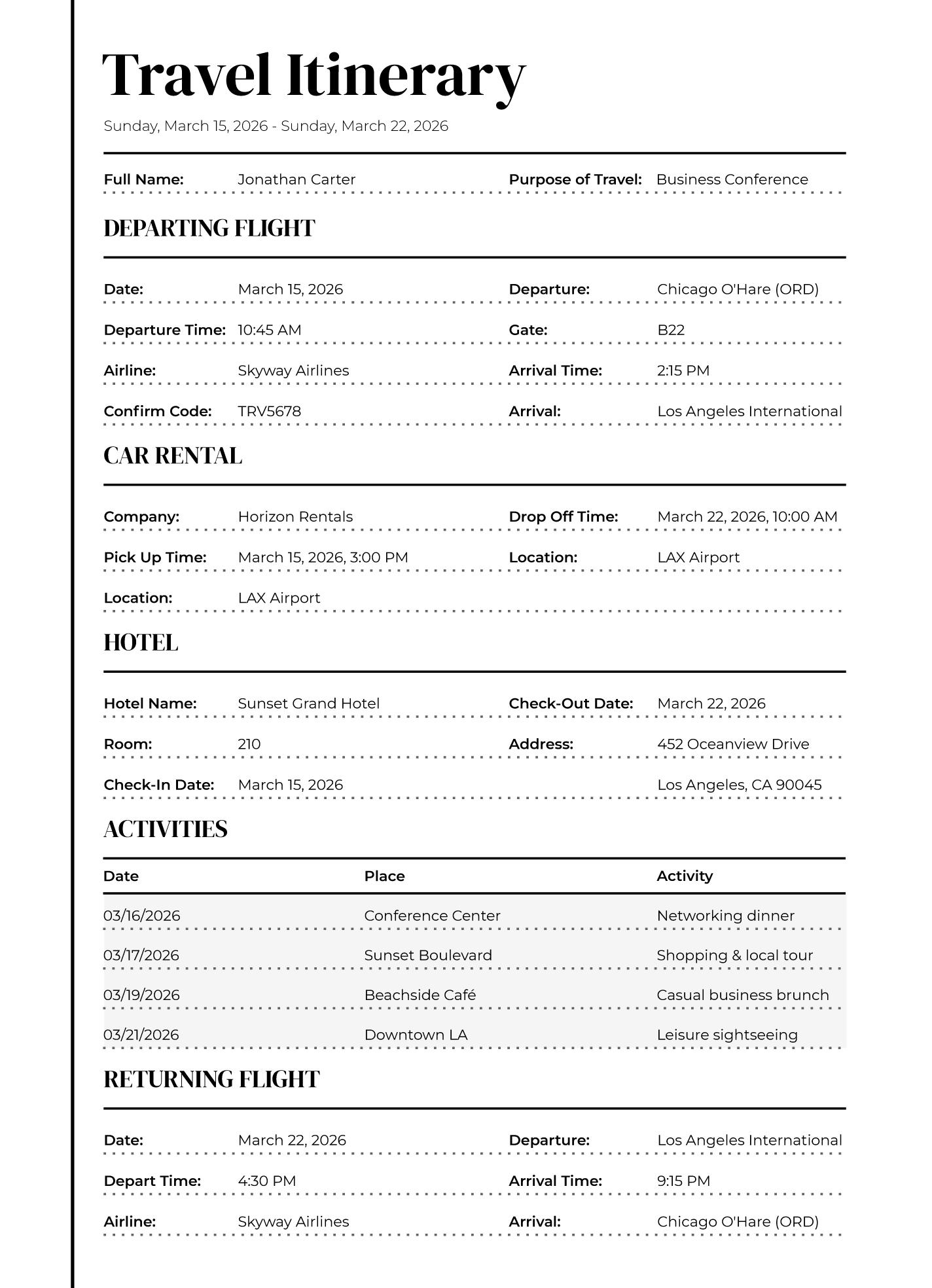
Executive travel often demands precision, efficiency, and careful planning to ensure every detail aligns perfectly with a busy schedule. Whether you’re a seasoned executive or a professional organizing travel for leadership, having a well-structured itinerary is crucial to maximizing productivity and minimizing stress. This practical guide offers a clear example of an executive travel itinerary, designed to streamline your trip from start to finish. By outlining key elements such as essential contacts, appointment times, transportation logistics, and downtime, this guide aims to help you create a balanced schedule that supports both business goals and personal well-being. Understanding how to craft an effective travel plan not only saves time but also empowers executives to focus on what truly matters-making impactful decisions and fostering meaningful connections while on the move. Join us as we explore the components of a successful executive travel itinerary, providing you with actionable tips and insights to elevate your next business journey.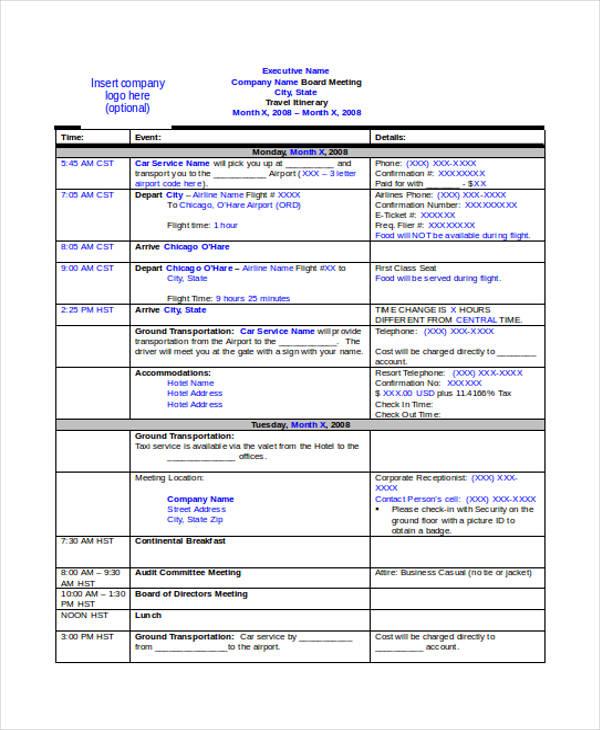
Essential Components of an Effective Executive Travel Itinerary
An effective executive travel itinerary is a precise blueprint combining clarity, flexibility, and thoroughness to streamline a busy professional’s journey. The backbone consists of key scheduling details such as departure and arrival times, transport arrangements, accommodation specifics, and essential contact information. Including designated meeting blocks with precise venues and participant details optimizes time and reduces ambiguities. Likewise, buffer periods between engagements are crucial to accommodate delays and spontaneous opportunities. Executive itineraries often benefit from visual clarity and structured layouts, typically enhanced through clean tables and bulleted lists that organize dates, times, locations, and notes effectively. Below is an example travel plan structure to showcase how these components integrate:
| Date | Time | Activity | Location | Notes |
|---|---|---|---|---|
| June 15 | 08:00 AM | Flight to New York | JFK Airport | Check-in 2 hours prior |
| June 15 | 01:00 PM | Client Meeting | Downtown Office | Bring presentation deck |
| June 15 | 06:00 PM | Networking Dinner | Hotel Grand Ballroom | Formal attire |
- Contact List: Include key contacts such as travel agents, hotel managers, and meeting coordinators for quick reach.
- Travel Documents: Highlight necessary passports, visas, and corporate identification to prevent last-minute hassles.
- Emergency Plans: Clear protocols for unexpected situations like delays or cancellations ensure peace of mind.
- Personal Time: Allocating moments for rest or local exploration improves well-being and productivity.
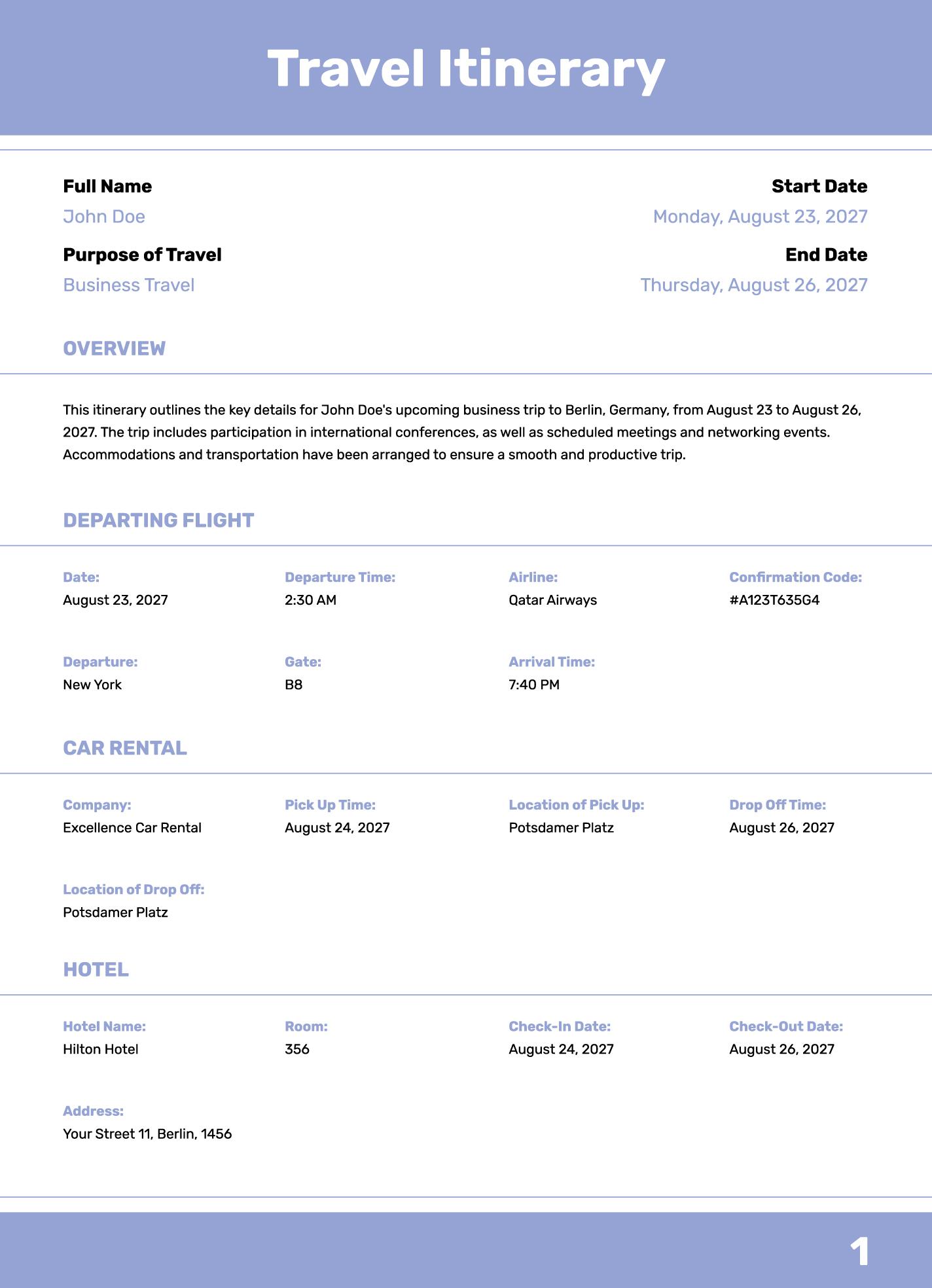
Tips for Customizing Your Itinerary to Maximize Productivity and Comfort
When tailoring your executive travel schedule, it’s crucial to strike the perfect balance between productivity and comfort. Begin by identifying your key objectives for each day and slotting in focused work periods surrounded by natural breaks to recharge your energy. Prioritize convenient accommodations close to meeting venues or provide spacious work environments-this minimizes commute stress and maximizes efficiency. Incorporate local amenities like cafes or lounges for informal brainstorming sessions or quick downtime, ensuring these productive pockets feel seamless rather than forced. Additionally, consider personal preferences such as preferred meal times, fitness routines, and rest periods to keep your physical and mental well-being intact throughout strenuous travel days. To help visualize these elements, here’s a simple layout to inspire your itinerary customization:
| Time | Activity | Location | Notes |
|---|---|---|---|
| 7:00 – 8:00 AM | Morning workout | Hotel gym | Boost energy & focus |
| 8:30 – 9:30 AM | Breakfast meeting | Nearby café | Casual yet professional |
| 10:00 AM – 12:00 PM | Client presentations | Conference room | Prepare tech in advance |
| 12:30 – 1:30 PM | Lunch & rest | Hotel restaurant | Unplug and recharge |
| 2:00 – 4:00 PM | Strategy session | Work lounge | Collaborative & creative |
| 5:00 – 6:00 PM | Evening walk or downtime | Local park | Clear mind before dinner |
- Flexibility: Build buffer times to accommodate unexpected delays or opportunities.
- Comfort-first: Choose transport and lodging options that allow for relaxation between commitments.
- Wellness Integration: Include short wellness breaks to combat travel fatigue effectively.
- Technology readiness: Ensure all necessary gadgets and connectivity essentials are prepared ahead.
- Prioritize meals: Use mealtimes for networking or a soothing pause depending on your day’s pace.
Crafting your itinerary with these thoughtful touches ensures that executive travel isn’t just about ticking off meetings but also about preserving your well-being and enhancing overall productivity. Gezify encourages embracing such balanced planning to transform any business trip into a fulfilling and efficient journey.
In conclusion, a well-planned executive travel itinerary is key to ensuring productive and stress-free business trips. By carefully organizing flights, accommodations, meetings, and downtime, executives can maximize their efficiency and maintain balance on the road. Remember, flexibility and clear communication with your travel team are essential to adapt to any unforeseen changes. With these practical tips and examples in mind, you can confidently create travel plans that support your professional goals while keeping your well-being in check. Safe travels!
Leave a Reply